
About MALICE MIZER - Visual-Kei
This page contains a brief explaination of the visual-kei genre, but from a “MM-point-of-view”: We look at VK (visual-kei) from the perspective of MALICE MIZER. The context behind the music will be explained, which makes you understand and appreciate the music more. This is NOT a general, complete history of visual-kei: It’s aimed towards MM fans who wish to learn a little more about the movement.
As you might have already read online, ‘MALICE MIZER’ is part of the ‘visual-kei’ (or just ‘visual kei’ or ‘vkei’) movement. VK is a musical (and visual) movement that sees its roots in 80s Japan, and while its peak was in the 90s, it is still very active and loved today, not only in Japan, but also all over the world.
What sets visual-kei apart from other musical movements, such as American ‘punk’ or ‘grunge’, is that the musical genres & styles of visual-kei aren’t standardised. There is no ‘true’, single visual-kei sound, genre, style, or look. Visual-kei bands make music in all kinds of genres: Thrash metal, power metal, speed metal, metalcore, rock, goth rock, pop-rock, pop, post-punk, darkwave, industrial, etc…
The music of visual-kei can be extremely hard, raw and aggressive, yet also very soft and sentimental. A lot of bands have their own unique sound; a mix of different musical influences, with a personal twist.
While vkei bands play a unique mix of musical genres, visual-kei itself also has many ‘visual-kei subgenres’, these are lots of diverse traditions and styles inside of vkei itself, unique to this movement. Some bands devote themselves to a subgenre very loyally, while other bands start off as one, and slowly evolve their sound. A classic evolution for example is the transition of a ‘kurofuku kei’ band into a ‘soft kei’ band. This is when bands who started out as obscure, independent, started out with a darker sound and look, and then became more soft and accessible, visually and musically, after becoming more popular, or signing a major record deal.
MALICE MIZER is most often seen as one of the pioneers pioneer of the subgenre tanbi kei, as they were one of the first to integrate French noble-inspired fashion, and lots of neoclassical elements to the music, something they already did in the earliest days of their career.
That said, MALICE MIZER is also a very representative example not just tanbi kei, but of the visual-kei scene as a whole: they took the genre-blending and colourful visual flair that many of the bands had, and cranked it to an extreme. And also dabbled in almost all visual-kei subgenres that existed at the time. And they also did not ‘soften up’ when signing to a major record deal with Nippon Columbia, but kept what makes visual-kei so unique throughout their whole existence. Many bands after MM took them as an example, or main influence. And sometimes even a single song that MALICE MIZER made inspired many other bands and songs.
MALICE MIZER’s musical genre is impossible to categorise exactly. Lots of songs are a complete mish-mash of different influences, genres, instrumentations, and sounds: No single label or name fits their songs or styles.
This complete mixture of influences makes the band and its creativity really stand out from any other music, not only in visual-kei, but also the entire worldwide music industry. It’s nearly impossible to find more artists that fill the exact same musical needs that MALICE MIZER fulfils with its listeners. So you better be happy with the just four studio albums that they made, full of one-of-a-kind songs replicated nowhere else hahaha!
While a lot of visual-kei bands, including MALICE MIZER, all have their unique sound and subgenre, there are still a lot of musical similarities and conventions shared between a lot of bands. A lot of detailed and technical aspects of the composition style; Such as common chord progressions, ways to build a melody, or rhythmic patterns are shared between tons of visual-kei bands spanning all eras and subgenres. Also, ways of arranging these compositions contains a lot of cliché’s typical to visual-kei. The singing styles are also shared between a lot of vocalists, just like the playing styles and sounds of guitars, basses, synthesizers, and drums/drum machines…
Some of these musical and technical aspects can also be found in other, non-VK Japanese music from the same times: City Pop, Kayoukyoku (歌謡曲), non-VK Japanese metal and rock, anime and movie soundtracks, and of course, Japanese video game music played a huge role in influencing young vkei musicians.
And some musical and visual aspects of visual-kei actually come from Western 70s/80s/90s music, such as glam rock, new wave, hair metal, and others. Some specific Western artists that had a big impact on vkei are David Bowie, SEX PISTOLS, Mötley Crüe, KISS, Dead or Alive, The Cure, Nirvana, and Marilyn Manson… But these are just a few names, there’s many more…
But what really makes a visual-kei band truly visual-kei, not ‘J-rock/J-metal/J-pop’ (like many other Japanese bands), is the conformity and similarities of the many bands in their concepts, visuals, fandoms, typical venues, marketing strategies, and so much more…
But there’s still exceptions… Actually, what might be the most important factor to know if a band is visual-kei or not, is if they just simply call themselves, so identify themselves as visual-kei! Even if there are a lot of differences with other VK bands… And yes, that even includes some non-Japanese bands!
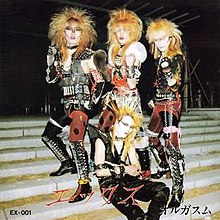
A photograph (not my scan) of X (X JAPAN) from 1986. It shows the early metal roots of visual-kei.
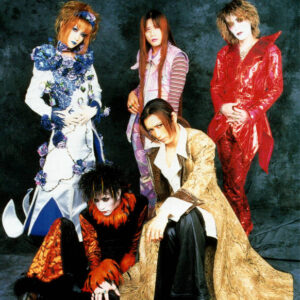
A photograph of MALICE MIZER from 1997, a perfect example of the unique beauty of the visual-kei movement
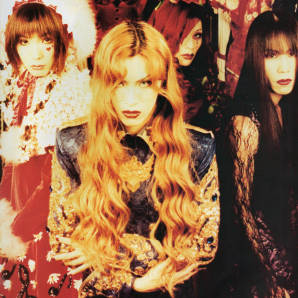
A photograph of LAREINE from 1998, another example of a unique visual-kei band
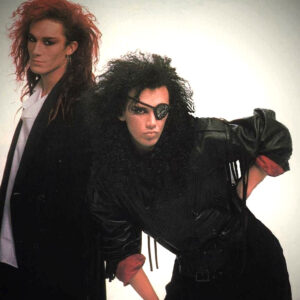
A photograph of Dead or Alive (not my scan), an English band that was very popular in 80s Japan, and had a lot of influence on visual-kei
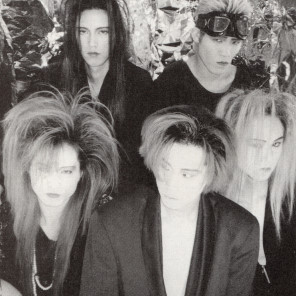
A photograph of D≒SIRE from 1994, a very influential band